The Educational Effect of Dog Stories on Children
Stories about dogs are not only fun — they are surprisingly educational. They help children grow in language, emotions, empathy, and confidence.
📚 The Educational Benefits of Dog Stories for Children
Dog stories combine two things most children love: animals and imagination. This makes them perfect for quietly practicing skills and emotions while simply enjoying a cozy story about a dog.
Whether it’s a playful Labrador, a brave street dog, or a tiny puppy still learning about the world, children recognize themselves in the dog and grow alongside the character.
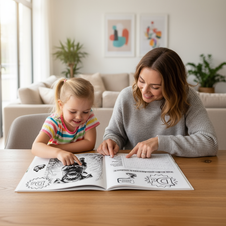 A good dog story feels safe and adventurous at the same time.
 Children easily identify with a dog in the story.
🧠 Dog Stories and Language Development in Children
Dog stories are often very visual and simple, making them perfect for children who are new to reading or listening.
Why dog stories support language development
- Repetition: recurring words (“ball,” “leash,” “bone”) reinforce vocabulary.
- Clear situations: walking, playing, searching — children immediately understand what’s happening.
- Natural dialogue: simple conversations between the child, dog, and parents help language come alive.
By diving into the same dog’s world again and again, vocabulary grows naturally — especially when parents ask questions like: “What do you think the dog will do next?”
💛 Dog Stories and Emotional Development
Emotions can be difficult to explain. But when a dog in a story feels scared, sad, or upset, a child understands it immediately. A dog doesn’t need to explain why he fears the dark — the situation itself makes that emotion clear.
Common emotions in dog stories
- Fear: a dog visiting the vet for the first time.
- Sadness: a dog missing its favorite toy.
- Joy: reuniting with its owner after a long day.
- Pride: a dog finally doing something that once felt too scary.
You can talk with your child through the story: “How do you think the dog feels right now?” This helps children understand and name their own feelings — gently and playfully.
🌟 Dog Stories and Social Skills
Dogs in stories often mirror children’s everyday social challenges. By watching how a dog navigates friendship, teamwork, or mistakes, children learn valuable social skills in a relatable and safe way.
Common social themes in dog stories
- Sharing: learning to share toys or space.
- Cooperation: solving a little “mystery” together.
- Responsibility: caring for a pet or helping others.
- Problem-solving: figuring out what to do when something goes wrong.
Instead of being told what to do, children naturally imitate the dog’s positive behavior — making learning feel effortless.
✨ How Dog Stories Build Confidence in Young Readers
Children often feel more confident reading about a friendly, non-judging animal. A dog doesn't criticize or expect perfection — making reading feel safe, fun, and encouraging.
Why dog stories boost confidence
- Low-pressure storytelling: dogs make mistakes too — and that’s okay!
- Predictable patterns: repeated dog behaviors help children follow the story.
- Emotional reassurance: a loyal dog character helps children feel calm.
- Small victories: each success the dog has feels like the reader’s own success.
This makes dog stories ideal for hesitant or struggling readers. A dog’s bravery, silliness, or curiosity keeps children turning the pages.
Explore More Magical Dog Stories for Kids
At Gomlin & Gizmo, we combine everything children love: dogs, adventure, colorful illustrations, and creative activities. Our storybooks and coloring books follow two Labrador puppies on their warmest, funniest, and most imaginative adventures.
Discover the Books of Gomlin & GizmoGratis kleurplaten van Gomlin & Gizmo
Download één of meerdere gratis kleurplaten van onze labrador puppy’s. Leuk om te kleuren, te bewaren of cadeau te doen! 🐾

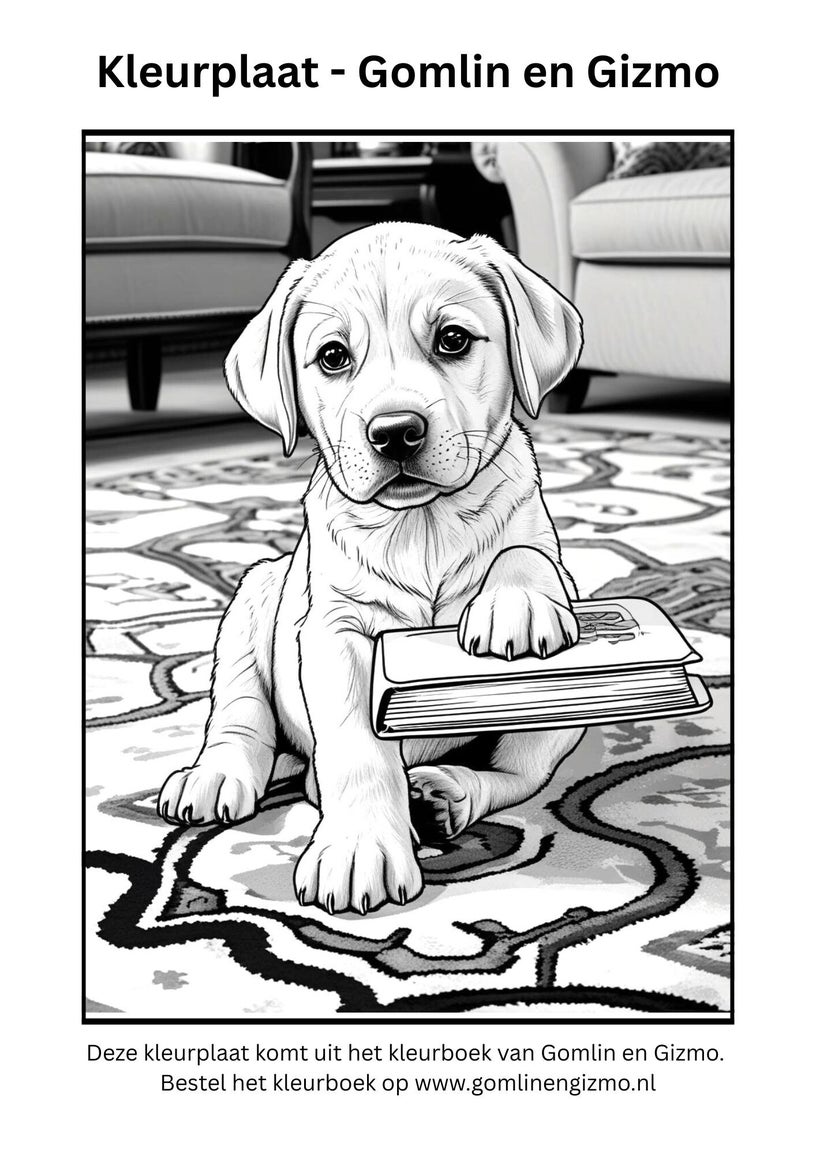

Alle kleurplaten vind je in het Gomlin en Gizmo kleurboek! 🎨🐾
Wil je nog veel meer kleurpret? Alle kleurplaten – als paperback of luxe hardcover – vind je in het prachtige Gomlin en Gizmo kleurboek. Leuk voor thuis, cadeau of in de klas!
Bekijk & bestel het kleurboekFrequently Asked Questions About Educational Dog Stories
Dog stories are not only fun — they are also wonderfully educational. Below, we answer common questions from parents and teachers about the educational benefits of dog stories for children.
1
What is the educational impact of dog stories on children?
Dog stories help children practice language, emotions, and social skills in a safe and playful way.
By following a dog as the main character, children learn to think along, empathize, and explore solutions — without feeling like they are “learning.” To them, it simply feels like enjoying a fun story about a dog.
2
How do dog stories support language development?
Dog stories often use clear, recognizable situations and simple vocabulary (like playing, searching, walking, ball, leash). This makes it easy for children to learn new words.
Reading about the same dog regularly helps vocabulary grow naturally. Asking questions along the way (“What do you think the dog will do next?”) also encourages active language use.
3
Can dog stories help children with emotions and empathy?
Yes. Dog stories make big emotions small and approachable. A dog that feels scared, jealous, sad, or excited feels familiar to children.
Discussing how the dog feels — and why — helps children recognize their own emotions and builds empathy toward others.
4
Are dog stories suitable for children who struggle with reading?
Absolutely. For children who find reading difficult, a dog often acts as a powerful motivator. “This book is about a dog? I want to read it!”
Short texts, engaging illustrations, and even coloring pages make reading feel less overwhelming. Dog stories are an excellent gateway to more reading enjoyment.
5
How can I get the most out of dog stories as a parent or teacher?
Don’t just read the story — take a moment to talk about it afterward. Ask questions like: “What was your favorite part?”, “How do you think the dog felt?”, or “What would you do in that situation?”
You can also connect the story to a coloring page or small activity. Let your child draw their favorite scene or imagine a new adventure for the dog. This helps the story stick — and makes learning even more fun.
Explore More Stories and Books from Gomlin & Gizmo ✨
Enjoyed this topic? Dive into more of our blogs and books! They’re filled with friendly dog characters, creativity, inspiration, and playful learning moments for children.